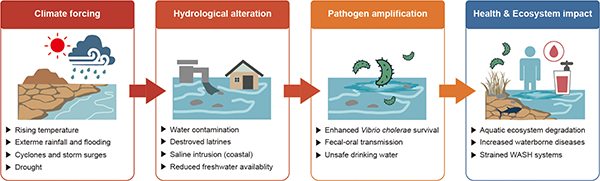
An open-access study examines waterborne diseases such as cholera and acute watery diarrhoea in Myanmar from 2021 to 2025. It combines health data with climate variables and a review of water and health policies. Cases peaked in the rainy season, and coastal and delta areas such as Rakhine and Ayeyarwady saw the most cholera cases. Fatality rates were higher in conflict-affected areas with weak infrastructure. Flooding appeared linked to outbreaks, but temperature and rainfall alone did not explain the patterns. The authors conclude that access to clean water and sanitation matters more than climate events on their own. They call for better coordination between the water and health sectors, stronger data sharing, wider local WASH services and climate-resilient planning.
Published in Water Research X (open access).